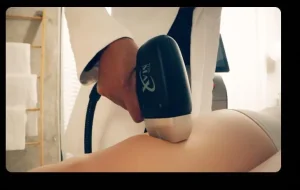
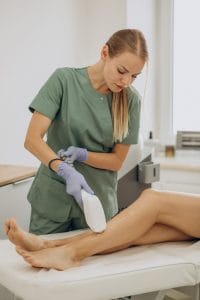
A patch test is a small, controlled exposure on the area being considered for laser hair removal. It gives the practitioner a limited opportunity to observe how your skin responds before treating a much larger area.
It is an important part of assessment, but it is not a guarantee. A patch test cannot promise that you will have no reaction later, that treatment will be painless or that you will achieve a particular amount of hair reduction. Its value comes from combining a representative test area with an appropriate observation period and an up-to-date health review.
Here is what to expect, why the timing matters and what to tell your practitioner before treatment.
What happens during a laser hair removal patch test?
The practitioner first needs information about the treatment area, your skin and hair characteristics, relevant medical history, medicines and recent exposure to sunlight, sunbeds or artificial tan. They then apply a small number of laser exposures to a limited part of the area that may later be treated.
The test should be representative of that treatment area while being placed as discreetly as practical. If you are considering more than one body area, ask whether each area needs its own patch test. Professional guidance notes that skin and risk factors can vary between areas.
The clinic should record the device, treatment area and settings used, along with your immediate response and any reaction you report during the observation period. The full treatment should only proceed after the required checks have been completed and the practitioner is satisfied with the response.
For a wider explanation of the consultation and treatment journey, read The Laser Suite’s laser hair removal clinic guide.
What does a patch test check?
A patch test helps the practitioner assess several connected points.
Your response to a limited exposure
The practitioner can observe the tested area immediately and ask you to monitor it afterwards. The clinic should explain which short-lived skin responses may be expected and which changes should be reported.
Whether the proposed settings need review
The result can inform the practitioner’s choice of treatment settings for the area. Settings should follow the device manufacturer’s instructions and the clinic’s written protocol. They should not be copied from another person’s treatment or chosen from generic online advice.
Whether new information changes the plan
A patch test forms one part of a broader suitability assessment. Recent tanning, a change in medication, a new medical or skin condition, a different treatment area, or a change of device or proposed settings may mean the practitioner needs to reassess or repeat the test.
Whether you have had time to make an informed decision
The interval also gives you time to consider the information, costs, alternatives and possible risks discussed during consultation. You should be able to ask further questions before deciding whether to proceed.
What a patch test cannot prove
A satisfactory response in a small area reduces uncertainty, but it does not remove it. Skin responses can vary across a larger area and can change with health, medication, sun exposure, products used on the skin and treatment settings.
A patch test cannot:
- guarantee that no later skin reaction will occur
- prove that every setting will be suitable across every body area
- predict an exact sensation for a full session
- guarantee a particular result or number of sessions
- diagnose a skin condition or other medical problem
- replace the health review and consent process before each treatment
This is why your practitioner should still check for changes before every appointment, even when you have previously had a patch test.
Why the waiting period matters
Some skin responses appear quickly, while others take hours to become clear. Starting full treatment immediately would remove the opportunity to observe a delayed response to the tested settings.
Professional guidance recognises that an observation period is part of safe patch-test practice. The exact interval must follow the device manufacturer’s instructions and the clinic’s current protocol.
Follow the timing confirmed by your practitioner. Do not shorten it because the test area looks calm straight away, and do not assume a time quoted by another clinic applies to your treatment.
What should you watch for after the patch test?
Before leaving, ask what response is expected, how long it may last and how to contact the clinic. Follow the written instructions for the exact test you received.
Contact the clinic promptly if you develop a response beyond what was explained, particularly blistering, marked or worsening swelling, significant pain, persistent heat, broken skin or a concerning change in skin colour. Seek urgent medical help for a severe or rapidly worsening reaction.
This article does not repeat the full care instructions for a treatment session. The Laser Suite’s existing laser hair removal aftercare guide covers the separate post-treatment topic. Follow the personalised instructions provided by your practitioner if they differ from general website information.
What should you tell the practitioner before treatment?
Accurate, current information matters more than trying to decide for yourself whether a change is relevant. Tell the practitioner about:
- medicines, supplements or topical products you have started, stopped or changed
- recent sun exposure, sunbed use or artificial tan on the proposed treatment area
- a new rash, infection, broken skin, irritation, bruising or change in pigmentation
- a new diagnosis, medical treatment, procedure or change in your health
- pregnancy, possible pregnancy or breastfeeding
- any unexpected response to the patch test or a previous laser treatment
Do not stop prescribed medication on the basis of an article or a treatment booking. Give the clinic the details and ask whether treatment should be delayed or whether advice from your prescriber is needed.
Also tell the practitioner if the planned body area, device or treatment settings have changed since your test. A previous patch test should not be treated as automatic clearance for a different plan.
Questions to ask at your appointment
Use these questions to understand the clinic’s process:
- Which device will be used for my patch test and full treatment?
- Is the test being carried out on the same body area that I want treated?
- Which skin, hair and health factors are you assessing?
- How long must I wait before full treatment, and what guidance sets that interval?
- What response is expected in the test area?
- Which changes should I report, and how should I contact the clinic?
- When would you repeat a patch test or change the treatment plan?
- Will you review my health, medicines and recent sun or tan exposure again before each session?
The answers should be specific to the equipment, area and person being assessed.
Patch-test timing: a simple timeline
At the consultation
The practitioner reviews your relevant history, medicines, skin and hair characteristics, intended treatment area and recent UV or artificial-tan exposure. A limited test is carried out and recorded.
During the observation period
You follow the clinic’s written instructions, avoid changing the plan yourself and monitor the tested area for the responses the practitioner has explained.
Before full treatment
The practitioner reviews the test response and checks whether anything has changed. Full treatment only proceeds if the assessment, timing, consent and current protocol requirements are satisfied.
Before later sessions
Report new medication, health, skin, tanning or treatment-area changes. The practitioner decides whether the existing assessment remains appropriate or whether a new test is needed.
Arrange a laser hair removal consultation in Winchester
The Laser Suite provides laser hair removal at 91 Olivers Battery Road South, Winchester, SO22 4JQ. You can review the clinic’s current laser hair removal service or contact The Laser Suite with a general booking question.
Do not include medical or health information in the website enquiry form. Please discuss treatment suitability privately with the clinic during your consultation.
Ask the clinic to confirm the current consultation and patch-test price before booking.
Frequently asked questions
Does a clear patch test guarantee that laser hair removal is safe for me?
No. It provides useful information from a limited exposure but cannot remove every risk or predict every later response. The practitioner must combine it with the wider assessment and check for changes before treatment.
How long after a patch test can treatment start?
The interval depends on the device manufacturer’s guidance and the clinic’s written protocol. Follow the timing confirmed for your test.
Do I need another patch test if I have had laser before?
Possibly. A new body area, a change in tan, medication, health, device or settings may require reassessment or another test. Tell the practitioner what has changed and let them apply the current protocol.
Does every body area need a separate patch test?
Professional guidance recommends a separate test for each body area requiring treatment. The practitioner should confirm what the clinic’s current protocol requires for your plan.